Folding an adorable towel bunny Japanese way!
Super mielas zuikutis išlankstytas iš rankšluosčio!
Fold the towel in half diagonally so you make a triangle. Slightly offset the top points. It looks like Mount Fuji! Perlenkite rankšluostį suformuodami trikampį, galls palikite šiek tiek prasilenkiančius, kad atrodytų kaip kalno viršūnės :)
Pull on the top points a little to make them completely straight. Grasp the bottom of the towel (Mount Fuji’s base) and roll it 3/4 of the way up.
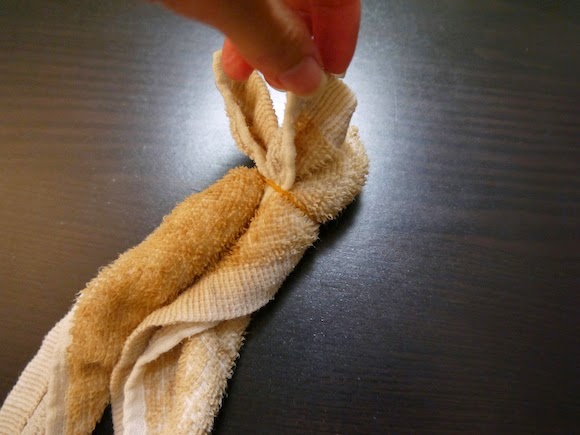
Suimkite "kalno" apačią ir sukite į rulonėlį link "viršūnių". Tada šiek tiek įlenkite ties viduriu duformuodami būsimą zuikučio snukutį. "Kalnų viršūnės" dabar bus zuikučio ausys. Timptelkite jas ir išgaubkite, kad įgautų gražią ausų formą.
Just to make things a lot easier while finishing off the rest of the body, secure a rubber band around the rabbit’s neck (the part behind the ears). You can skip this part once you’ve gotten used to making towel bunnies, but for now, let’s use it.
Kad zuikutis neprarastų formos, sutvirtinkite jo kūnelį gumyte (apsukite vietą už jo ausų).
Slightly open the two rolls of towel that are sticking out. Cross the two open rolls over each other. These are your bunny’s legs! Fold the legs under the bunny’s body, making sure the front legs are nestled under his chin. Secure the bunny’s feet with the same rubber band that’s around his neck.
Šiek tiek praskirkite ir sukryžiuokite likusius rankšluosčio "rulonėlius", tada sulenkite juos, kad galai atsidurtų ties zuikučio snukučiu - tai bus zuikučio pėdutės. Sutvirtinkite pėdutes ta pačia gumute, kurią apvyniojote už jo ausų.
Fluff up the backside and you’ve got yourself an adorable towel bunny!
Dabar tiesiog papurenkite zuikučio kūnelį, kad ygautų daugiau tūrio. Štai ir viskas - mielas minkštas zuikutis baigtas :)
Source: http://youpouch.com/2014/02/04/167218/ http://en.rocketnews24.com